Standard-of-care protocols combining psychotherapy, pharmacological support, and behavioral counseling have demonstrated real clinical value, yet they leave a significant gap.
That gap lies at the neurophysiological level.

A neuromodulation approach designed to address the neurophysiological mechanisms that conventional treatments leave untouched.
Relapse remains the central problem in addiction treatment. Despite decades of progress, relapse rates for substance and nicotine use disorders remain persistently high, often exceeding 50% within one year of treatment completion.
Standard-of-care protocols combining psychotherapy, pharmacological support, and behavioral counseling have demonstrated real clinical value, yet they leave a significant gap.
That gap lies at the neurophysiological level.
Addiction is sustained by:
Dysregulated reward processing
Heightened stress reactivity
Impaired executive control
Persistent cue-induced craving
These are rooted in altered function across prefrontal, cingulate, insular, and Default Mode Network pathways — circuits that current protocols rarely target directly.
The Default Mode Network (DMN) plays a central but often underappreciated role in substance use disorders. Typically active during self-referential processing and mind-wandering, the DMN becomes dysregulated in addiction in ways that directly fuel craving and relapse.
DMN dysfunction in addiction has been associated with:
Persistent self-referential craving and rumination on substance-related thoughts
Reduced ability to disengage from internally driven urges
Impaired coordination between the DMN and executive control networks
Heightened vulnerability to cue-triggered relapse under stress
When DMN activity dominates, attention shifts inward, behavioral control becomes reactive rather than intentional, and cue exposure triggers self-reinforcing cognitive loops. Effective intervention therefore requires strategies that can reduce maladaptive DMN engagement, strengthen regulatory network dominance, and restore flexible switching between internal and external attention.
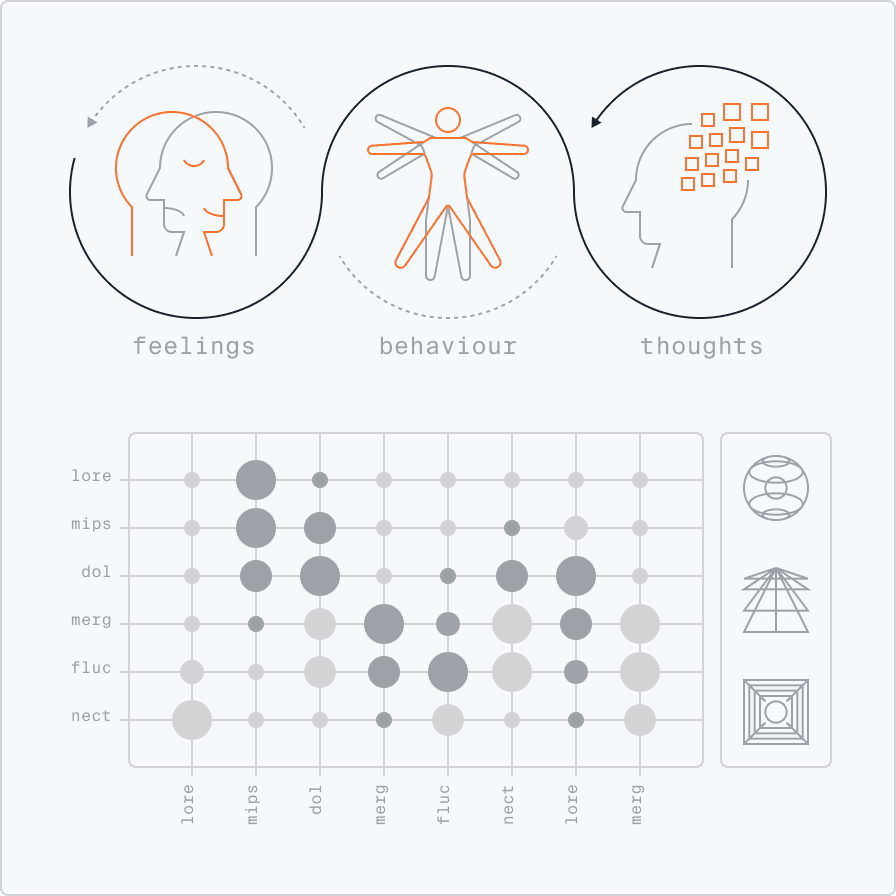
Neuromind combines wearable EEG sensors, artificial intelligence, and immersive virtual reality within a closed-loop system. It is built to address the neurophysiological mechanisms of addiction directly — not as a replacement for existing clinical protocols, but as a tool to extend their reach.
EEG-derived biomarkers of arousal and attention guide patients toward regulatory network engagement.
Evidence-based mindfulness components, made more accessible through guided immersive sessions.
Neural monitoring of DMN responses to substance-related cues, with real-time adaptive calibration.
Real-time neurofeedback to regulate DMN dynamics.
Neuromind continuously monitors EEG-derived biomarkers of arousal, attention, and emotional state. Using proprietary machine-learning algorithms trained on psychophysiological data, the system detects shifts in neural activity associated with DMN engagement and feeds this information back to the patient in real time through adaptive changes in a virtual environment.
This allows patients to actively learn to shift their brain state away from DMN-dominated, craving-prone patterns and toward task-positive, regulatory network engagement. Over repeated sessions, this training may support more durable self-regulation of craving and stress reactivity.
Mindfulness-based training, enhanced by immersion.
Mindfulness-based interventions are among the few psychological approaches with demonstrated capacity to attenuate DMN activity and reduce maladaptive self-referential processing. Neuromind integrates mindfulness-based components within its VR environment, making these practices more accessible, more engaging, and more measurable than traditional delivery formats.
For patients who struggle to engage with conventional mindfulness programs, the immersive and adaptive nature of the platform provides a more concrete, guided pathway into these regulatory skills.
Adaptive cue exposure with neural monitoring.
Cue exposure is a well-established component of addiction therapy, but it carries the risk of amplifying DMN-driven craving when not carefully calibrated. Neuromind enables clinicians to monitor individual DMN responses to substance-related cues in real time and adapt cue presentation accordingly — limiting maladaptive activation while supporting extinction of internally reinforced craving loops.

Neuromind is not intended to replace pharmacological or psychotherapeutic treatment. It is designed as a precision augmentation layer, offering clinicians an objective window into the neurophysiological states that drive relapse — and a tool to train patients to regulate those states directly.
Neuromind is committed to building the clinical validation necessary for adoption in evidence-based addiction care. We are actively seeking academic and clinical collaborators to jointly define clinical targets, develop treatment protocols, and conduct early-stage validation studies.
If your institution is exploring neurofeedback, DMN-targeted interventions, or digital therapeutics in the context of addiction, we would welcome the conversation.
VR neurofeedback targets the neural mechanisms underlying addiction, particularly the Default Mode Network. By combining real-time brain monitoring with immersive environments, users can train to reduce maladaptive DMN engagement, weaken cue-induced craving loops, and strengthen executive control networks.
Contact. If you would like further information or a demonstration of our solution, please contact us using the following link